DHgate Seller Brand Profile Checklist
DHgate Seller Brand Profile Checklist
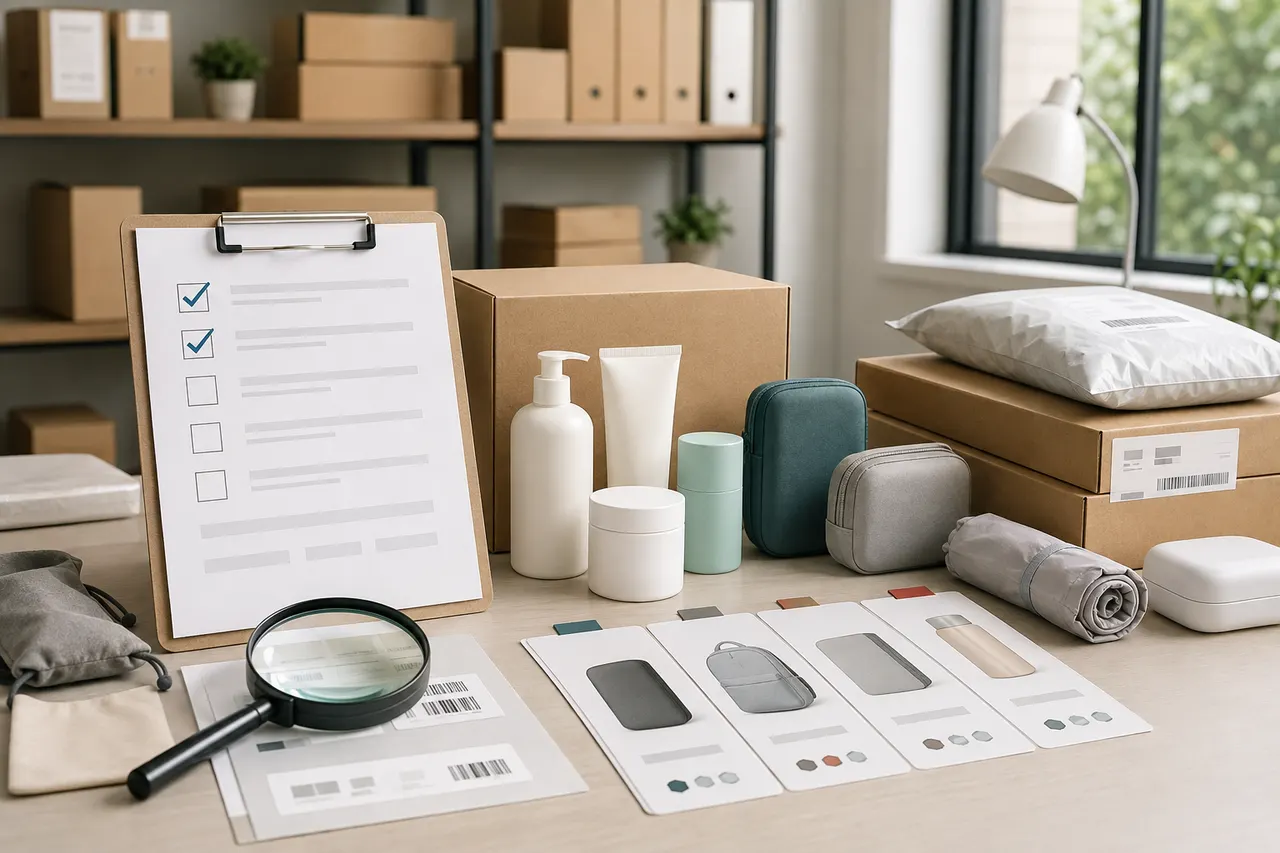
Caption: Organize the store identity, product line, and evidence chain into a seller brand profile before placing an order to reduce impulse buying and information asymmetry.
Who this profile is for among dhgate buyers
If you see a seller on dhgate who has been selling the same type of product for a long time, but you are not sure whether it is a brand owner, factory store, channel dealer, or just a general reseller, this article is for you.
It solves a very specific problem: how to use public pages, product records, review content, and seller replies before placing an order to compile a reviewable seller brand profile, rather than paying based only on sales volume, low price, or a couple of attractive pictures.
This profile is especially suitable for the following buyers:
First-time buyers from a particular dhgate store who want to reduce the risk of a bad purchase
Those preparing to buy in bulk, repurchase long-term, or source for clients
Products involving details like size, material, packaging, accessories, or version differences
Those who need to add dhgate products to their own sourcing sheet, price comparison sheet, or agent ordering process
Those who see the store claiming to be a factory, official, brand, or wholesale, but the page evidence is not clear enough
It is not suitable for determining that a product is definitely genuine, definitely high quality, or definitely able to pass customs. Dhgate store information, inventory, prices, shipping routes, and after-sales policies may change. The verification date of this article is 2026-09-08. Before actually placing an order, you should still reopen the store page and product page to confirm. 🔎
For readers of dhgatespreadsheets.net, this profile can serve as a supplementary step before selecting products in a spreadsheet: first confirm whether the seller is worth following up on, then organize the product links, prices, specifications, image evidence, and risk notes into your own sourcing sheet, rather than just piling up popular links together.
First define the difference between brand, factory store, and ordinary seller
Many dhgate buyers mistake "a store name that looks like a brand" for "the seller is the brand owner." This step first needs to separate three concepts.
A brand seller usually needs to be able to explain a stable brand name, product series, packaging labels, after-sales commitments, and a traceable store identity. It does not necessarily have to be a big brand; it could be a niche private label, but it should at least let buyers know "what this store has been operating long-term."
A factory store emphasizes production or supply capability. A credible factory store usually showcases products around a fixed category and can explain materials, specifications, customization options, minimum order quantities, production cycles, and quality inspection methods. But the term "factory store" itself is not evidence; it is just the seller's self-description.
An ordinary seller or a general merchandise store may sell many unrelated categories at the same time, such as shoes, lamps, accessories, electronic accessories, and household items mixed together. This kind of seller is not necessarily impossible to buy from, but it is usually more suitable for one-time low-risk purchases, not for treating it as a stable brand source.
When judging, don't just ask "is it a brand?" More practical questions are:
Does the store operate around the same product line long-term?
Is the information on product pages mutually consistent?
Do review images support the seller's display images?
Can the seller answer questions about source, specifications, packaging, and after-sales?
Is the page record sufficient for you to trace dispute points after payment?
If none of these questions have answers, do not write it as a "brand profile"; you can only write it as a "seller record pending verification."
Compile citable basic information from the store page
When building a profile, the first step is not to look at a particular hot product, but to collect basic information from the store page. You need to record information that is reviewable, screenshotable, and comparable, not subjective impressions.
It is recommended to record at least these fields:
Store name: record as displayed on the page, avoid translating or rewriting on your own
Store link: save the full URL for later review
Store main category: only write the categories and product range visible on the page
Seller's claimed identity: such as brand, factory, wholesale, official, etc., must be marked as "seller self-claimed"
Store opening time or store age: only record if explicitly shown on the page
Rating, transaction volume, followers: re-confirm before placing an order, as these numbers change
Store announcement or service commitments: record the original meaning, do not expand into guarantees
Contact information and response method: record in-site messages, inquiry entry, or consultation method on product page
The most common mistake here is treating page slogans as facts. For example, expressions like "high quality," "best supplier," "authentic style" cannot directly enter conclusions; they can only serve as promotional language that needs further verification.
In the purchasing sheet of dhgatespreadsheets.net, you can split these contents into separate columns: seller name, store URL, claimed identity, main category, evidence note, last checked date. This way, when someone else reviews it later, they don't need to guess why you kept this seller. 📋
Use the product line to judge whether the seller has been operating the same category long-term
The product line is more valuable than store promotion. If a seller has been deeply engaged in a certain category for a long time, there are usually explainable connections between products: similar materials, continuous sizes, stable packaging, similar accessories, similar shooting styles, and clear version distinctions.
You can randomly select a group of products from the store for observation. Don't just look at the first few recommended positions on the homepage, because recommended positions may be short-term hot sellers or platform sorting results. A more reliable approach is to select products from different pages, different price ranges, and different listing times.
When judging the product line, focus on three things.
First, see if the categories are concentrated. For example, if a seller mainly does phone accessories, it can have phone cases, screen protectors, stands, and charging accessories; if there are also wedding dresses, sports shoes, kitchen knives, and pet supplies, mark it as "category dispersed."
Second, see if the specification language is professional. Sellers who have been stable in a certain category can usually clearly distinguish sizes, models, materials, compatibility ranges, colors, and packaging versions. If the page has only a lot of adjectives but lacks specification parameters, the purchasing risk increases.
Third, see if the price range is reasonable. It is normal for different versions, materials, or sets to have price differences; but if similar products have large price differences and the page does not explain why, you need to ask the seller where the difference comes from.
You can use a simple grading:
Grade A: concentrated categories, clear specifications, multiple product information supports each other
Grade B: categories generally consistent, but some product information is insufficient and needs follow-up
Grade C: categories dispersed, templated descriptions, difficult to judge the seller's long-term capability
This grading is not a quality guarantee; it only determines whether you should continue to inquire, add to the purchasing sheet, or switch stores.
Check whether product pages, review images, and store information are consistent
The most valuable part of a seller brand profile is comparing information from different pages together. Many risks are not visible from a single page, but are exposed when contradictions appear between the store page, product page, review images, and seller replies.
First check the product page title and the store's main category. If the store claims to specialize in a certain type of product, but the core product page titles often stack irrelevant keywords, it means the seller may rely more on search traffic than a clear product line.
Then look at product images and review images. Product main images are usually filtered and not suitable for judging real appearance alone. If review images exist, focus on whether the colors, packaging, accessories, size proportions, and detail workmanship shown by buyers are consistent with the product page. Do not write review images as "actual test" unless it is inspection material you legally obtained and recorded yourself.
Then check specifications and after-sales commitments. The product page states one material, the seller's message says another; the page promises a certain accessory, but review images repeatedly show missing accessories; the title says in stock, but the seller replies that production is needed. These should all go into risk notes.
Finally, record the time. Prices, inventory, promotions, shipping methods, and ratings may change. Every key judgment in the profile should have a verification date. For example:
Store page verification: 2026-09-08
Product page verification: 2026-09-08
Review image observation: 2026-09-08
Seller reply: pending supplement or screenshot saved
If you plan to purchase through an agent or transshipment process, also save product specifications, colors, sizes, quantities, notes, and screenshots together for warehouse inspection comparison. 🧾
Evidence table: information that can be trusted, needs follow-up, and cannot be confirmed
The following table can be used directly as a pre-order profile template. Its purpose is not to prove the seller is reliable, but to distinguish "what can be confirmed, what is missing, and what cannot be said."
Check Item | Acceptable Information | Information Needing Follow-up | Information That Cannot Be Confirmed |
|---|---|---|---|
Store identity | Store name, store link, main category as shown on page | Whether it is a private brand, factory direct, or has fixed after-sales process | Cannot confirm official identity or brand authorization solely by store name |
Product line | Whether visible products in store are concentrated in same category | Reasons for differences in version, material, set, and price | Cannot judge professionalism solely by product quantity |
Product page | Current display of title, specifications, images, price, shipping options | Inventory, production cycle, packaging, accessories, replacement rules | Cannot treat promotional words as quality guarantees |
Review content | Images, time, and buyer feedback direction in public reviews | Whether negative review issues resolved, whether recent batches changed | Cannot fabricate ratings, tests, or usage experiences not shown |
Seller reply | Content clearly answered in in-site messages | Vague replies, skipped questions, after-sales boundaries | Cannot expand verbal promises into platform guarantees |
When using this table, the most important thing is to leave blanks. Do not force-fill fields that cannot be confirmed. Blank is safer than guessing, because blank reminds you to continue asking or reduce order size.
Brand and source questions to complete when asking the seller
After organizing the public pages, if the seller is still worth following up, use in-site messages to complete key information. Questions should be specific, not just "is this good quality" or "are you real factory." Such questions are too broad, and sellers can easily reply with templates.
More effective questions include:
Is this product part of your store's fixed product line, or a temporary listing?
Which version is currently sold at this link, and is it consistent with the version in the images?
What are the materials, dimensions, weight, and packaging list?
Do you support taking actual product or packaging photos before shipping?
If colors, sizes, or accessories are inconsistent with the page, how is after-sales handled?
For bulk purchases, may different batches have packaging or detail differences?
Can you specify in the order note the specifications that must be checked?
If the seller avoids source questions, it does not necessarily mean you cannot buy, but you should lower the profile grade. Especially when preparing for bulk purchases, a seller who cannot explain product line, version differences, and after-sales boundaries is more important to note than a slightly higher price. ⚠️
At the same time, do not ask the seller for unnecessary personal information or sensitive documents. Normal purchasing verification requires product, store, packaging, specification, and after-sales evidence, not requiring sellers or buyers to disclose passports, bank cards, complete shipping labels, private addresses, etc.
If you use dhgatespreadsheets.net to organize candidate products, you can split seller replies into three columns: answered, unclear, follow-up needed. This way the table does not become a pile of screenshot warehouses, but directly supports ordering decisions.
Final action: build a pre-order seller brand profile
After completing verification, you should obtain a concise and actionable seller brand profile. It does not need to be long, but it must answer four questions: who is this seller, what do they mainly sell, what evidence supports continuing the order, and what risks still exist.
Suggested profile contents:
Seller name and store URL
Verification date: e.g., 2026-09-08
Main product line: only write the visible range on the page
Seller's claimed identity: mark as self-claimed, not directly accepted
Representative product links: choose the ones most relevant to what you want to buy
Product page evidence: specifications, images, packaging, price, and shipping display
Review evidence: whether review images support page description
Seller reply: confirmed and unconfirmed questions
Risk level: A, B, C, or continue observing
Next action: small order test, continue follow-up, add to purchasing sheet, do not buy for now
The conclusion should be specific. For example, don't write "seller is good." You can write: "Currently, the products displayed in this store are concentrated in the same category, product page specifications are relatively complete, but brand identity remains only seller self-claimed; it is recommended to make a small order first and request in the order note to check color, size, and packaging list."
The benefit of writing this way is not saving a fixed amount of money, but reducing the probability of ineffective communication, wrong orders, and after-sales disputes. This step is especially valuable for high-priced, bulk purchases, or buyers who need transshipment inspection. ✅
But it also increases time cost. If you are only purchasing low-priced, low-risk, replaceable small items, a complete profile may not be worth it; if store information is chaotic, seller replies are vague, and review images and product pages clearly contradict, it is not recommended to increase the order just for cheapness.
The final action is simple: first use public pages to build evidence, then use seller replies to fill gaps, and finally write the conclusion into the purchasing sheet. Continue with what can be confirmed, keep notes for what cannot be confirmed, and remove from the candidate list if risk is too high.
Agent Platform Shopping FAQ
1. Why use spreadsheets on dhgatespreadsheets.net?
Since agent platforms rarely showcase products directly, you need a spreadsheet to look up the items you want and get their purchase links. You could also ask for suggestions on Reddit or Discord—those communities often share great finds, but the purchasing path is usually more time-consuming. These spreadsheets are built gradually over months by collecting recommendations from those platforms.
2. If you are not satisfied with a product after purchasing on dhgatespreadsheets.net, what should you do?
Reach out to your agent platform's customer support as soon as possible. For most non-specialty products from Chinese sellers, there is a 5-day unconditional return and exchange window. If you are not satisfied, you can file a return request. If the package has already been shipped and delivered to you, and you find a quality defect, you must contact the agent platform's support team so they can help you communicate with the seller to work out a compensation arrangement.
Customer service emails for each platform are listed below:
kakobuy: [email protected]
oopbuy: [email protected]
usfans: [email protected]
hipobuy: [email protected]
superbuy: [email protected]
3. What product categories are included in the spreadsheets on dhgatespreadsheets.net?
This site's spreadsheet covers shoes, clothing, bags, accessories, jerseys, fragrances, hats, scarves, belts, and various household daily necessities.
4. What should new users who use an agent platform for the first time through dhgatespreadsheets.net pay attention to?
First-time users who access a Taobao agent via the spreadsheet typically receive a new-member shipping discount package. Additionally, be sure to review the step-by-step beginner's shopping tutorial.
5. Is the spreadsheet website dhgatespreadsheets.net safe?
This website does not gather any personal information; it functions only as a product listing directory for the agent platform. All purchases and payments are completed on the agent platform itself.
Browse our latest products and find your next favorite item.